David H. Koch Theater
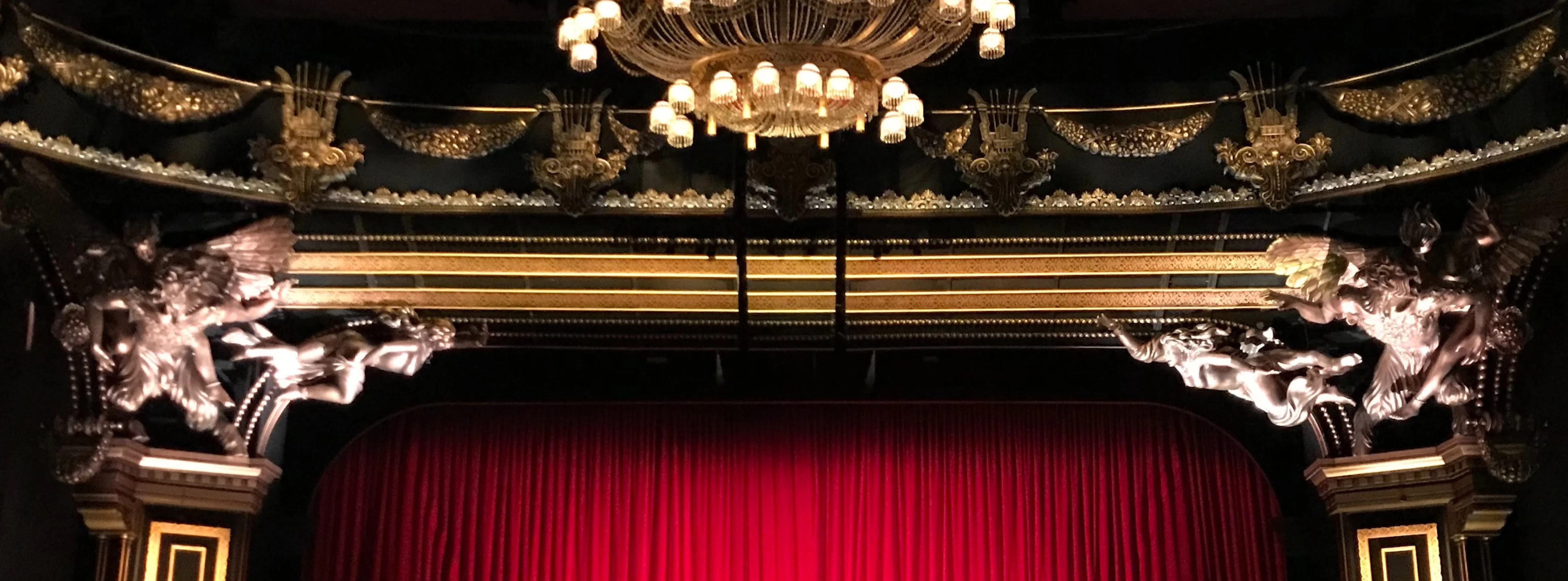
The David H. Koch Theater is a premier venue for ballet and modern dance, located within New York's prestigious Lincoln Center. The auditorium showcases a blend of classical and continental-style seating on the orchestra level, complemented by 5 ‘Rings’ (balconies) adorned with gem-like faceted lights and a grand spherical chandelier suspended from the gold-paneled ceiling. In the lobby, an array of exquisite artworks has been commissioned to accentuate different facets of the ballet world, encompassing mythology, numerical elements, the human body, and a diverse array of themes, many inspired by George Balanchine's suggestions. Seating Capacity: 2,586 David H. Koch Theater seating plan helps you find the best seats in the theater.

About David H. Koch Theater
- The David H. Koch Theater has a capacity of 2,586 split across the Orchestra level and five "rings" of balconies.
- The Orchestra is closest to the stage, while the rings are at different levels.
- The front rows in the Center Orchestra tend to offer the best views for most shows, but this varies across productions. For instance, solo performances are better viewed up close, while ensembles are best viewed from a distance.
- The rings offer decent views of the stage but the rear, corner, and topmost seats might face some sight restrictions for certain productions.
- The rear seats in the Orchestra are a good choice for decent views at affordable prices.
- Wheelchair-accessible seating is in the Orchestra and the first and fourth rings.
The David H. Koch Theater, initially named the New York State Theater, was commissioned as part of the State of New York's participation in the 1964-1965 World's Fair. Following the fair, the City of New York took over the venue and leased it to the Lincoln Center, who further subleased it to the City Center of Music and Drama, who currently manages it.
While primarily a center for arts like ballet and opera, the David H. Koch Theater has also been at the forefront of musical revivals of Broadway classics, particularly during the '60s. In 2008, oil-and-gas billionaire David H. Koch pledged $100 million over ten years for the theater's operation and maintenance. Later that year, the venue was renamed in his honor, though it is often still referred to by its original name.
- Philip Johnson and John Burgee designed the David H. Koch Theater for the 1964-1965 World's Fair.
- It was built in the Postmodern style and features more eclectic and colorful elements, unlike the more rigid and restrained styles of other venues of the era.
- The Orchestra level is much broader while the Rings curve around, facing the stage.
- The lush red and gold evoke classical aesthetics. Design features like the central chandelier and gold latticed ceilings create a sense of a venue from well before its time.
- JCJ Architecture worked on renovations that made the venue ADA-compliant, including adding aisles to the Orchestra and upgrading the restrooms. They also improved technical features backstage, expanding the scope of productions at the venue.
- In keeping with its postmodern approach, the venue features the work of several modern artists like Jasper Jorns, Lee Bontecou, and Reuben Nakian.
- The King and I (1964)
- Carousel (1965)
- Annie Get Your Gun (1966)
- Show Boat (1966)
- South Pacific (1967)
- Youth America Group (2024)
- Sehn Yun (2024)
Know before you go
- Address: 20 Lincoln Center Plaza, New York, NY 10023, United States
- Bus: The nearest stop is at Columbus Avenue and West 63rd Street. It services line M11 and stops right at the theater's entrance. Lines M5, M7, M10, M66, and M104 stop within a block of the venue.
- Subway: The nearest station is 66 St - Lincoln Center. It services lines 1 and 2.
- Car: Patrons can hop off near the theater entrance if arriving by car or taxi. Parking is available at the venue and nearby lots.
- Parking: The Lincoln Center Quick Park Self-Park Garage is the easiest option. Patrons are advised to book in advance as spots fill up fast. Designated accessible parking spots are also available.
- Recommended mode of transport: The subway is the best option for reaching this venue.
- Restrooms: Restrooms, including accessible ones, are available on all levels at this venue.
- Water fountain: Water fountains and cups are available on all levels.
- Assistance and accessibility: Hearing and visual aids and assistance for patrons with mobility issues are all available at this venue.
- Accessibility: The theater is designed with accessibility in mind and features minimal steps. The Columbus Avenue and 63rd Street entrance offers the best accessibility, with a ramp to the lobby where elevators take you directly to the auditorium.
- Accessible seating: Designated wheelchair-accessible seating is in the Orchestra and the first and fifth Rings, all accessible via elevators.
- Hearing and visual assistance: Infrared headsets, neck loops, assistive listening systems, large print and braille programs, and binoculars are available at the guest services desk, box office windows, or coat check on the Orchestra level. Most services are accessible for free, particularly for early arrivals, but additional headsets and binoculars are available for rent at the coat check.
- Book parking: Reserve your spot by 3 pm the day of your show. For matinees, reserve your spot by 3 pm the day before.
- Arrive early: We recommend arriving at least 30 minutes before your show so you have time to explore the venue, get through coat check and entry, and locate your seat. Latecomers will not be seated until a seating break.
- Dress code: There is no dress code for this venue. Patrons are encouraged to dress comfortably, though the venue welcomes dressing for the occasion.
- Baggage: Large bags and items may be checked at the cloakroom. Smaller bags that fit under your seat are allowed inside the venue. All bags are subject to security screening. Hearing and visual aids may be rented at the coat check.
- Food policy: Outside food and drink are not allowed at the venue. Patrons may purchase snacks and refreshments outside the theater, but may not take them inside or consume them during the show.
- Restrictions: Large recording equipment, weapons, food, and drinks are not permitted inside the theater. While some shows encourage recording others strictly prohibit it. Patrons are encouraged to check the rules for each performance beforehand.
- Seats: All sections are accessible via elevators. Corner and fifth Ring seats are the least preferable due to sightline restrictions. Binoculars can be quite handy, particularly for Ring seats.
- Pets and service animals: Service animals are welcome at this venue. Pets are not permitted.
The David H. Koch Theater is located in a bustling area filled with a variety of restaurants to suit every person's taste.
- Rosa Mexicano: Mexican restaurant serving classics like creamy guacamole with innovative cocktails.
- Directions
- The Smith: Classic American fare served alongside beers, cocktails, plenty of seating options, and an ambiance worth every penny.
- Directions
to The Smith
- The Greek Kitchen: Classic and cozy restaurant serving no-fuss comfort food and Greek specialties.
- Directions
- Bar Boulud: Parisian-style dining featuring the handiwork of Chef Boulud.
- Directions
to Bar Boulud
- Momofuku Noodle Bar Uptown: Asian restaurant in a shopping mall serving some of the best ramen in the locale.
- Directions to Momofuku Noodle Bar Uptown
Frequently asked questions about David H. Koch Theater
The theater is 60 years old.
The venue was constructed and opened in 1964.
The David H. Koch Theater was commissioned by the State of New York and originally named in its honor. When billionaire David H. Koch began funding the venue, it was renamed for him, though many still refer to the venue by its older name.
20 Lincoln Center Plaza, New York, NY 10023, United States.
The theater is accessible via all modes of transportation, though we recommend the subway.
The theater was leased to the Lincoln Center for the Performing Arts, which subleased it to its current management, the City Center of Music and Drama.
The theater has a capacity of 2,586.
This venue is ADA-compliant and one of the most accessible venues on Broadway. All areas are accessible via elevators. Level access from the entrance directly into the lobby and accessible elevators make for a smooth experience for all patrons. Accessible toilets are on every level and accessible seating is on the Orchestra and the first and fifth Rings. Hearing and visual aids are also available.
The theater is notable for its staging of ballet and opera productions. It has also staged several Broadway revivals. It has been a home to the New York City Ballet since its opening and also stages productions from the American Ballet Theatre in the fall season. Its current lineup includes shows from the Shen Yun company.
The 2024 Tony Awards will be held at the Lincoln Center's David H. Koch Theater.
The venue has no dress code. It encourages patrons to dress according to their style.
The best seats are usually in the Center Orchestra. We recommend seats closer to the stage for smaller performances. For ensembles and larger productions, rear seats and Ring seats work better. If you're unsure which seats work for the show you're seeing and have a limited budget, rear Orchestra seats are your best bet.
The venue serves snacks and refreshments, but if you're after something else, there are plenty of options around. For classic American fare, try The Smith. For cuisine-based food, try Rosa Mexicano, The Greek Kitchen, Parisian Bar Boulud, or Asian at Momofuku Noodle Bar Uptown. There are also several roadside stalls and eateries, bars, pubs, and hotel chains to offer more variety.
The Lincoln Center itself is a beacon of history and artistry. Outside the venue, try the American Folk Art Museum and the Sesame Street Sign. The Manhattan New York Temple is also a sight to behold, even if you're not stopping by for mass. If you're just looking for a spot to relax and enjoy the view, try the Hearst Plaza.
