About Broadhurst Theatre
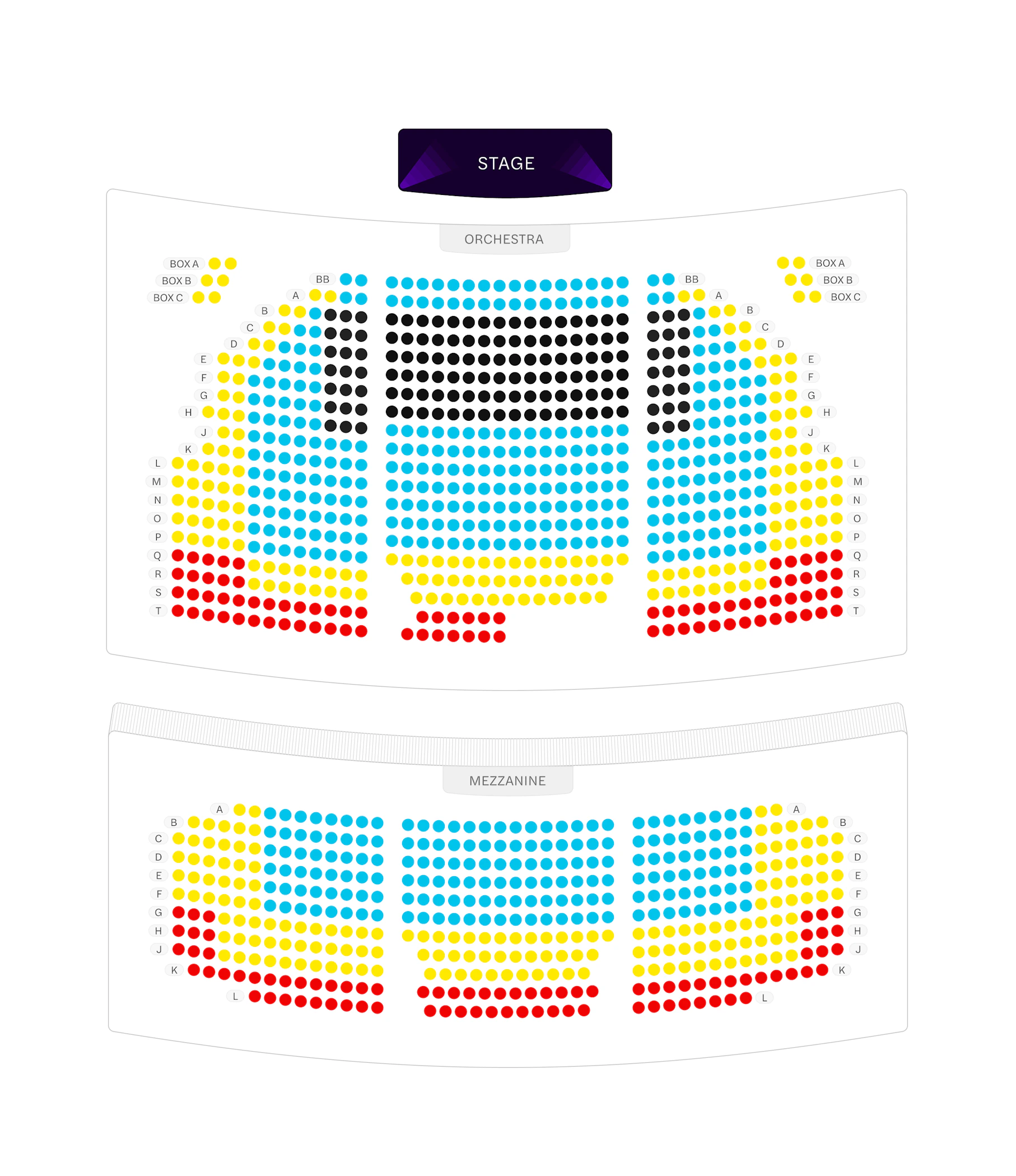
- The Broadhurst Theatre has a capacity of 1,156 split across two sections: Orchestra and Mezzanine. It also has boxes along the sides and standing sections.
- The Center Orchestra offers the best views of the stage. The Center Mezzanine also offers great views, particularly for performances that require an elevated view.
- The middle of both sections offers decent views at affordable rates. However, these popular seats sell out soon, so be sure to book well in advance.
- The seats right at the front are too close to the stage for certain shows where some acts happen at the sides of the stage. Rows D to K are premium seats with great views at higher rates.
- Rows A and N in the Orchestra, A and K in the Mezzanine, and A in the Balcony offer more legroom.
- Step-free, wheelchair-accessible seats are in the Orchestra.
Broadhurst Theatre seating chart >
The Broadhurst Theatre opened in 1917 with George Bernard Shaw's Misalliance. The venue was a collaborative project between producer George Broadhurst and the Shubert brothers. The latter had a site on lease from the Astor family and constructed the Booth and Shubert Theatres on the eastern half. Following the success of these venues, they decided to develop the western half, and the Broadhurst Theatre was born.
The theater went on to stage a variety of productions, including comedies, musicals, plays, and an adaptation of Tarzan of the Apes featuring real animals. A venue that put its best foot forward to stage unforgettable experiences, it would prove to be a successful theatrical space. Some of its longest-running shows included Cabaret, Grease, Les Misérables, and Mamma Mia! Most recently it has become a home to the jukebox musical, A Beautiful Noise, depicting the life and music of Neil Diamond.
- The Broadhurst Theatre was designed by Herbert J. Krapp in the neoclassical style.
- A hallmark of Krapp's work, the theater has a simpler design than most, relying on the brick-and-stone arrangement instead of adding additional decorative elements.
- The facade features curved corners facing Broadway, where audiences come in from. The ground floor includes a granite water table with vertical terracotta blocks above.
- Glass-and-bronze doors and display boxes, aluminum frames, a marquee, the fire escape, and theater entrances are the extent of ornamentation one would find on this theater's exterior.
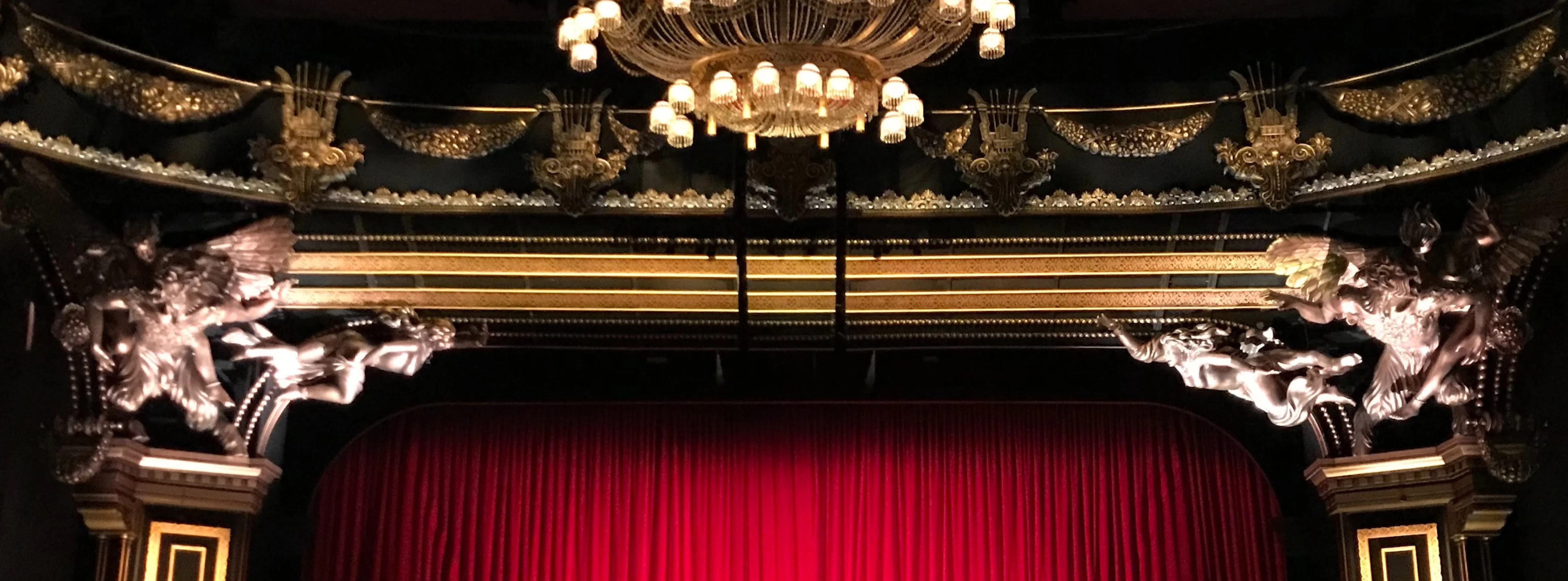
- The interiors feature more ornamentation in the form of an Adam-style frieze, Doric-style cornices and capitals, chandeliers, medallions, plasterwork panels, and more.
- Doric pilasters flank the boxes, with a frieze of horsemen on the entablature above.
- The sections are raked toward the Orchestra pit, meaning most seats offer unobstructed, clear views of the stage.
- Misalliance (1917)
- Tarzan of the Apes (1921)
- Hamlet (1931)
- My Fair Lady (1962)
- Cabaret (1966)
- Grease (1972)
- Long Day's Journey into Night (1986)
- Kiss of the Spider Woman (1993)
- Mamma Mia! (2013)
- A Beautiful Noise (2022)
Know before you go
- Address: 235 W 44th St, New York, NY 10036, United States
- Bus: The nearest bus stops are on 7th Avenue and West 44th Street, which services lines M7 and M104, and 8th Avenue and West 43rd Street, which services lines M20 and M104. The 42 St-Port Authority Terminal Bus Station is also within walking distance of the theater.
- Subway: The 42 St-Port Authority Terminal Bus Station, servicing lines A, C, and E, and Times Sq-42 St, servicing line 7, are within walking distance of the theater.
- Cars and cabs: Patrons may hop off at the theater's entrance on 44th Street if arriving via taxi, but for those driving down, finding streetside parking might prove to be difficult, particularly during peak seasons.
- Parking: The theater does not have parking. Patrons may park at nearby garages and lots such as Times Square Parking, Meyers Parking, 344-346 West 45th Street Parking, Icon Parking, and more. For a smoother experience, try booking your slot in advance through SpotHero, ParkWhiz, or similar services.
- Recommended mode of transport: The subway is a quick way to get to the theater minus the hassle of parking hunting, paying premium rates, or reaching your show late due to traffic.
- Elevators: Some sections of this venue are inaccessible since there are no elevators or escalators. The accessible seats in the Orchestra have step-free access.
- Restrooms: The restrooms are in the lobby. The unisex, accessible restroom is on the Orchestra level.
- Accessible seating: Wheelchair-accessible seats are in the Orchestra.
- Hearing and visual assistance: Accommodations can be made for patrons with hearing or vision needs.
- Concessions: Concession stands are in the lobby.
- Accessible entrance: The main entrance on 44th Street is step-free.
- Escalators and elevators: There are no escalators or elevators at this theater.
- Wheelchair-accessible seats: The Orchestra has wheelchair-accessible seats and step-free access.
- Accessible and adapted restrooms: The unisex, wheelchair-accessible restroom is on the Orchestra level.
- Hearing and visual assistance: Limited infrared-assisted listening devices are available for each performance. Ten weeks after a show's opening, downloadable audio descriptions and handheld devices become available. Captioning devices are also available.
- Arrive early: Avoid delays by reaching the theater at least 30-45 minutes before showtime. Pre-book your parking spot if possible.
- Dress code: There is no dress code but this theater, though air-conditioned, is known for being warmer than others. A jacket is recommended during winter, but in other months, it helps to dress lightly.
- Baggage: Small to medium-sized bags as well as lighter coats may be checked. The theater will not check larger items, such as strollers or heavy coats and furs.
- Food policy: Outside food and drink are not permitted at the theater. Patrons may purchase concessions at the theater.
- Restrictions: All kinds of recording equipment are prohibited. Noisemaking devices, flashlights or pointers, any kind of weapon, and other disruptive devices or dangerous items are also not permitted.
- Pets and service animals: Pets are not permitted at the theater. Special accommodations may be made for certain service animals. Patrons are encouraged to make arrangements with the venue before their arrival.
The Broadhurst Theatre sells food and drink in-house for a higher price. If you'd prefer to eat elsewhere, there are plenty of options nearby.
- Playwright Celtic Pub: Perfect pre-show Irish beers and pub grub served on a roof deck.
- Directions
- Junior's Restaurant & Bakery: BBQ and deli fare spot whose specialty is cheesecakes served alongside a full bar and patio.
- Directions
- John's of Times Square: Eatery serving thin-crust pizzas since 1997.
- Directions
- Butter: All-American eatery serving trademark cocktails set in a gorgeously sleek space with communal seating.
- Directions
to Butter
- Haru Sushi: Japanese cuisine and specialty sushi paired with happy hour cocktails.
- Directions to Haru Sushi
Frequently asked questions about Broadhurst Theatre
The venue is over 100 years old.
The theater was constructed in 1917.
The theater gets its name from George Broadhurst, a British-American theatrical producer who leased the venue before its opening. Known for crafting melodramas that offered a profound study of morals, some of his works include What Happened to Jones, Why Smith Left Home, The Man of the Hour, and The Crimson Alibi.
235 W 44th St, New York, NY 10036, United States
Patrons can reach the venue via car, taxi, bus, subway, and city bikes.
This theater is owned by the Shubert Organization.
The theater has a capacity of 1,156, including boxes and standing spaces.
Children under the age of 4 are not permitted at this theater.
The theater has no elevators or escalators. It has an accessible section in the Orchestra with step-free access, designated wheelchair-accessible seats, and a unisex wheelchair-accessible restroom. It also provides hearing and visual assistance.
The theater has staged many long-running and successful shows during its run. Some notable productions include Hold Everything!, Fiorello!, Kiss of the Spider Woman, Mamma Mia!, and several of Shakespeare's plays. Its recent production is A Beautiful Noise, based on the work of Neil Diamond.
The show premiered at Boston's Emerson Colonial Theatre in 2022 before moving to Broadway's Broadhurst Theatre later the same year.
The show runs for about 2 hours and 15 minutes, including one intermission.
The raked sections provide a decent view of the stage from all areas of the theater. The Center Orchestra and Center Mezzanine offer some of the best views at decent rates, while the middle of the Center Orchestra tends to have pricier seats with great views. The rows right at the front offer restricted sight lines of the sides of the stage, though front rows of each section offer better legroom.
There is no dress code at this theater. While most theaters tend to be kept cool all year round, this venue is known for being warmer than most. Dress lightly and bring an extra sweater or jacket during colder months.
Prices vary based on show times, seats selected, season, and more. Tickets for A Beautiful Noise: The Neil Diamond Musical currently starts at $67.10.
The theater sells a limited menu of food and drinks at the concessions stands in the lobby.
If theater concessions aren't your jam, try the Playwright Celtic Pub for beers and pub grub or Butter for cocktails and chatter. For cuisine-based delights, try the Japanese menu at Haru Sushi or Italian at John's of Times Square. For dessert, give Junior's a try.
There is plenty to do in the theater district. For classic sights, there's Times Square and Madame Tussaud's Wax Museum. For theater aficionados, there is the Museum of Broadway. For travelers looking to do something fresh, there's everything from escape rooms and alleys with novelty stores and bookshops to skyscrapers with unique views and backstories.