Music Box Theatre
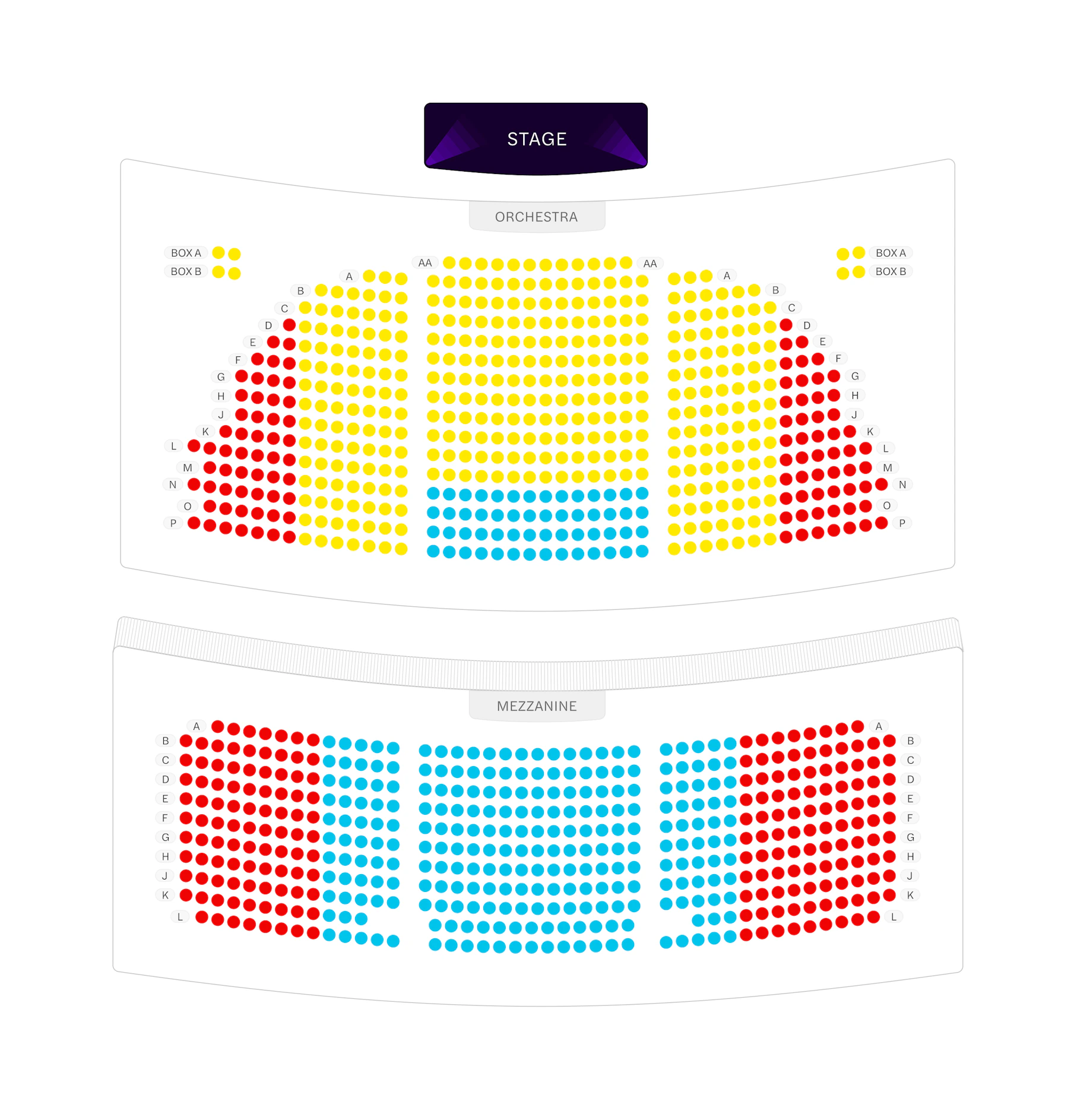
The Music Box Theatre is a Broadway theatre in Midtown Manhattan known for its quaint, jewel-like qualities. Built in 1920 to house the musical revue of Irving Berlin, the Music Box Theatre has since presented a series of hits from classic plays to modern musicals. Many of its shows have been adapted into well-known films. The theatre's neo-Georgian architecture and intimate seating make it a unique venue in the heart of Broadway. Seating Capacity: 1025 Music Box Theatre seat plan will help you find the best seats in the theatre.

About Music Box Theatre
- The Music Box Theatre has a capacity of 1,025, split across two sections: Orchestra and Mezzanine. It also has 16 boxes and standing space.
- The Center Orchestra offers the best views of the stage. The front rows tend to be priced higher, while the Middle Orchestra and Middle Mezzanine offer decent views at affordable rates.
- Row A in both sections has more legroom.
- Wheelchair-accessible seats are in the Orchestra. The Mezzanine is inaccessible to patrons with limited mobility.
Music Box Theatre seating chart >
The Music Box Theatre opened in 1921 with the work of Irving Berlin. The space was primarily meant to host revues and proved to be an instant hit, drawing in praise from audiences, critics, and architectural publications. Its unparalleled design and high-quality productions made it one of the most sought-after venues on Broadway, a distinction it holds even today.
Following the death of owner Sam H. Harris, the theater changed hands several times, with Irving retaining partial ownership for sentimental reasons. It staged everything from revivals of plays to musical productions of specific artists, such as Stephen Sondheim. It was designated a landmark for protection in 1987.
- The Music Box Theatre is built in the Palladian style which favors symmetry and the use of classical elements. The interiors also feature neo-Georgian and Adam-style elements.
- The limestone facade was inspired by the Chestnut Street Theatre in Philadelphia. The east side and the center feature glass and bronze doors, wood and glass signboards, and decorative columns with Corinthian tops.
- Motifs of swags and urns adorn various parts of the facade.
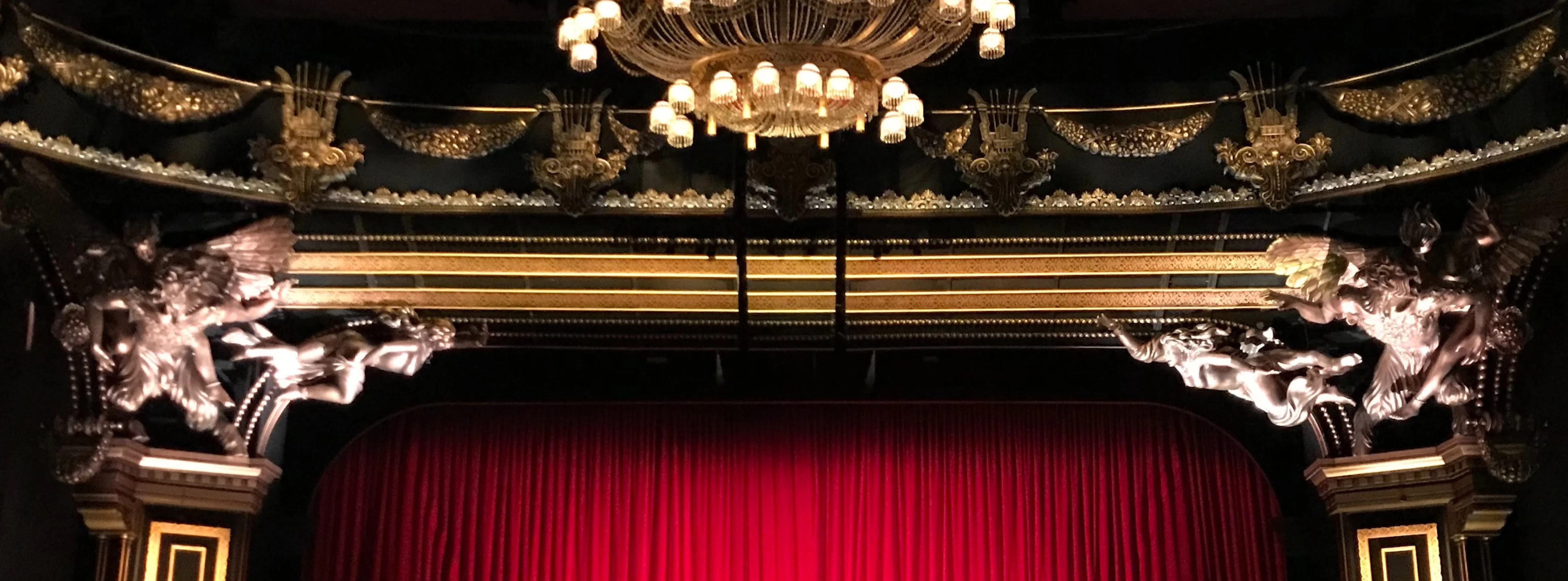
- The auditorium features raked sections, Corinthian-style piers, classic plasterwork panels, and Adam-style elements. Flower motifs and medallions that depict female characters are some of the decorative elements in the interiors.
- Music Box Revue (1021)
- Chicago (1926)
- Pride and Prejudice (1035)
- Who's Afraid of Virginia Woolf? (1976)
- Side by Side by Sondheim (1977)
- Macbeth (2000)
- Dear Evan Hansen (2016)
- Suffs (2024)
Know before you go
- Address: 239 W 45th St, New York, NY 10036, United States
- Bus: The nearest bus stop is on the corner of 8th Avenue and West 43rd Street. Lines M20 and M104 stop here.
- Subway: The nearest subway station is on 49th Street. It services lines N, Q, R, and W. The Times Square–42 Street stop is slightly further away. It services line 7.
- Cars and cabs: Patrons may drive or taxi to the theater and hop off on 45th Street. Since parking is difficult to find in the area, pre-booking a parking spot at a nearby garage is recommended.
- Parking: There are multiple garages in the vicinity including Times Square Parking - Valet Garage, Myers Parking, Icon Parking, 344-346 West 45th Street Parking, and more. Bookings can be made via city parking apps.
- Recommended mode of transport: The subway will get you within walking distance of the theater without breaking the bank or landing you in heavy traffic.
- Elevators: The theater has no elevators or escalators. The Orchestra offers accessible seating and has step-free access.
- Restrooms: The theater has restrooms across the venue. An all-gender, accessible restroom is on the Orchestra level. Other restrooms are in the lower lounge and on the Mezzanine.
- Accessible seating: Wheelchair-accessible and transfer seats are in the Orchestra section.
- Hearing and visual assistance: Accommodations can be made for patrons needing hearing or vision assistance.
- Accessible entrance: The main entrance on 45th Street is step-free.
- Escalators and elevators: This theater has no escalators or elevators and sections other than the Orchestra may be inaccessible to some patrons.
- Wheelchair-accessible seats: The Orchestra has wheelchair-accessible and transfer seats.
- Accessible and adapted restrooms: The all-gender, wheelchair-accessible restroom is on the Orchestra level.
- Hearing and visual assistance: Accommodations can be made for patrons with specific hearing or vision needs. Assistive devices are available for all shows.
- Arrive early: We recommend arriving 45 minutes or more before your show. This allows enough time for parking, entry, and getting to your seat.
- Dress code: There is no dress code. Patrons are encouraged to dress comfortably.
- Baggage: Patrons may check their coats and bags in the cloakroom. Large items, like strollers or heavy furs, may not be permitted.
- Food policy: The theater does not permit outside food or drink.
- Restrictions: All recording equipment, particularly larger ones, as well as noisemaking devices, flashlights or pointers, weapons, and other disruptive devices or dangerous items are prohibited.
- Pets and service animals: Pets are not permitted at the theater, but some service animals are allowed. Contact the venue to check whether they can accommodate your service animal beforehand.
The Music Box Theatre does not serve food and drinks but patrons may visit nearby restaurants before or after their show to enjoy a scrumptious meal or a quick bite.
- Trattoria Trecolori: Classic Italian cuisine paired with a cozy bar setting.
- Directions
- Junior's Restaurant & Bakery: BBQ and deli spot with a full bar, patio, and a cheesecake menu that will keep you coming back for more.
- Directions
- Carmine's: A family-friendly Italian restaurant serving a large selection of home-style meals.
- Directions
to Carmine's
- The Mean Fiddler: Irish and American pub grub set in an old-school Irish pub with DJs, salsa nights, and more.
- Directions
- Churrascaria Plataforma: Brazilian Rodizio-style restaurant serving skewered meats and salads.
- Directions to Churrascaria Plataforma
Frequently asked questions about Music Box Theatre
The venue is nearly 100 years old.
The theater was constructed in 1927.
Urban lore suggests that the theater was named based on a suggestion from Irving Berlin, for whom the theater was later made. Owner Sam H. Harris loved the name so much, he encouraged Berlin to write a song for the theater.
239 W 45th St, New York, NY 10036, United States.
The theater can be reached by all modes of transport.
The theater is owned by the Shubert Organization.
The theater has a capacity of 1,025 seats.
The theater does not permit children under the age of 4.
The theater has a step-free main entrance, designated wheelchair-accessible and transfer seats that are accessible via the main entrance and ticket lobby, and a wheelchair-accessible restroom. It also provides hearing and visual assistance.
The theater has had a long history of staging successful, award-winning shows. Its lineup has included Chicago, Merrily We Roll Along, The Diary of Anne Frank, Cat on a Hot Tin Roof, Pippin, and several Shakespearean plays. More recently, it has staged Dear Evan Hansen and Suffs.
The musical premiered in 2022 at the Off-Broadway Public Theater. It transferred to the Music Box Theatre in 2024.
The Center Orchestra has the best seats in the house. The middle rows tend to be more affordable. The center Mezzanine has decent views at affordable rates. For better legroom, try Row A in either section.
The theater has no set dress code but patrons are encouraged to dress comfortably and appropriate for the occasion.
Prices at the theater vary based on timings and seats. Ticket for Suffs currently start at $52.70.
The theater does not permit outside food or drink nor does it sell any in-house.
There are plenty of dining options near the theater, such as Italian restaurants Trattoria Trecolori and Carmine's, the Brazilian Rodizio-style Churrascaria Plataforma, or the Irish-American pub The Mean Fiddler.
The district has notable attractions like Times Square, Madame Tussaud's Wax Museum, the Museum of Broadway, Birdland Jazz Club, The Modern Museum of Art, and more. The theater also sits near the Diamond and Garment Districts.